Music is the journey
How a carefully chosen playlist can take you through the full spectrum of what it means to be human — and why that matters more than you think
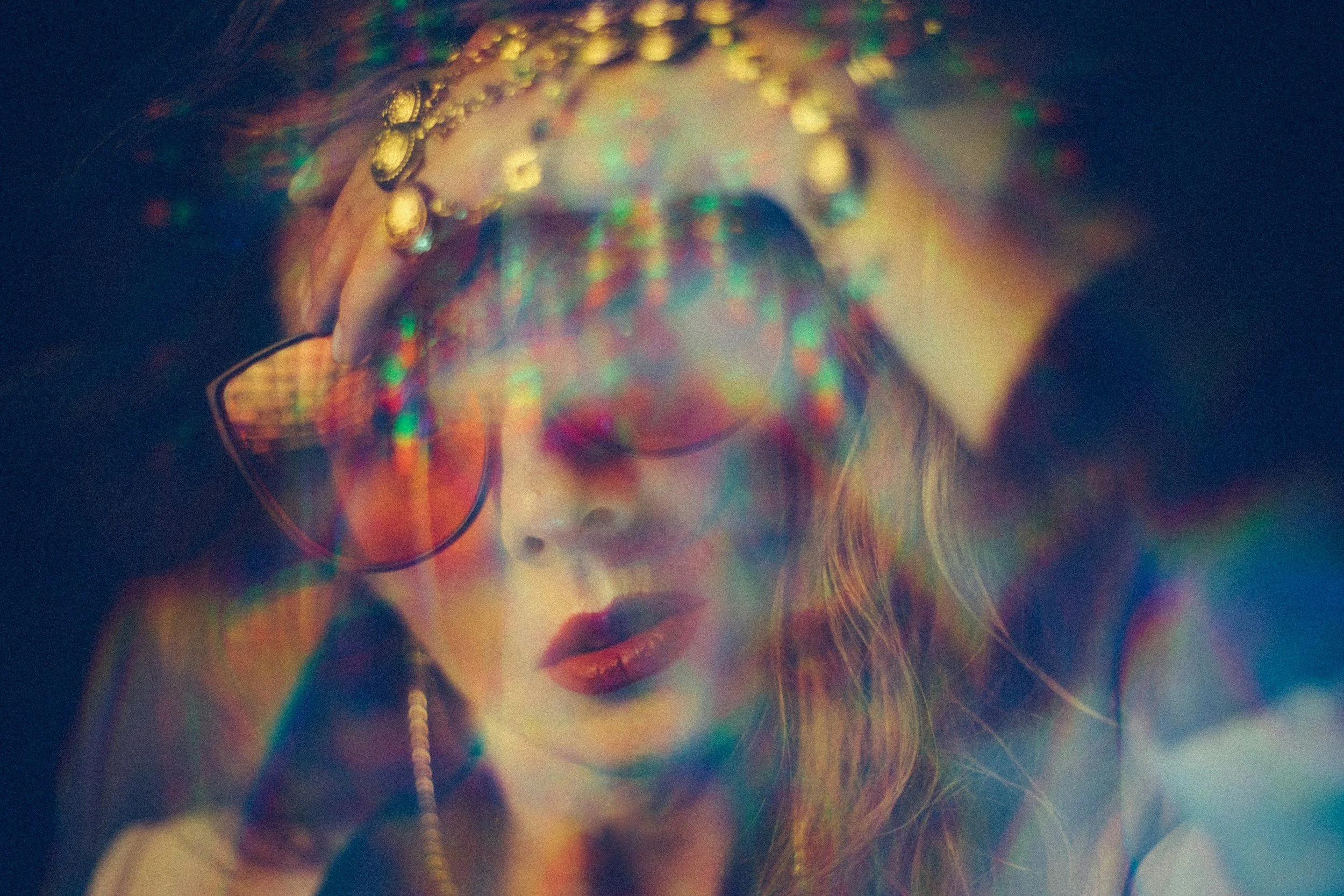
Woman with closed eyes surrounded by swirling multicolour brushstrokes — the emotional journey of a psychedelic experience guided by music
Why is a psychedelic journey called a journey?
Because it is one. A journey through emotions. Through memories. Through the body. And in that journey, music plays a central role.
In a psychedelic state — which is a highly open, and therefore also vulnerable state — music doesn't just set the mood. It actively shapes what happens. It can bring up emotional material that has been sitting untouched for years. It can trigger insights, patterns of thought, tears. But also laughter, raw energy, deep tenderness, love. And yes, sometimes anger and irritation too.
I remember my first psychedelic journey. There was a moment when I became aware of the lyrics playing:
"I release control and surrender to the flow of love that will heal me."
I found myself automatically humming along inside my head — the song was a mantra, the same words repeating over and over. And then something amazing happened! I noticed my body beginning to do exactly what I was hearing. Relaxing. Opening. Filling up with something warm and overwhelming that seemed to radiate outward from my chest, flooding my entire body. I was, in the most literal sense, intoxicated by bliss.
And in that moment, my mind stepped back and observed: Ah. So this is how it works. This song is setting me up to feel this.
And yes. That is exactly how it can work.
Music and lyrics activate specific things in the brain and body. In an ordinary state, we often resist this — we stay partly defended, not always allowing ourselves to give in to our emotions. In a psychedelic state, that resistance drops. You can fully feel what the music is inviting you to feel. All of it.
Music, psychedelic journeys and emotional diversity
And this is where it gets interesting.
There is a concept in positive psychology called emotional diversity — sometimes compared to ecological diversity. Think of two gardens. One has many different flowers, trees, bushes, all kinds of life, all rich and well represented. The other has only grass and one tree. Which one feels more alive?
The same is true for the human inner world. Someone who can experience the full range of emotions — the highs, the lows, the quiet in-between — is like that first garden. Someone locked in depression, where only one tone dominates and the rest barely registers, is like the second.
And there is also research that indicates that emotional diversity is linked to wellbeing - not just happiness, but a life with genuine meaning, pleasure, and aliveness. A life that is more than surviving.
This is what we hold in mind when we compose the music for a ceremony.
Not a nice background. A journey. A sequence that moves people through different states, different energies, different emotional textures — things they may not have allowed themselves to feel in a long time. When the sadness comes, the music holds space for it. Then it shifts. And here comes something lighter, playful, joyful. And then something cinematic and expansive — yes, let's go. And then something soft and loving again.
On and on through the garden.
And what I find most profound about this is not the intensity of the peaks. It is what people relearn in the process: that emotions are safe to feel. That you can go fully into sadness and come back out. That joy can be trusted. That the whole spectrum is available to you — and that living there, in all of it, is what it actually feels like to be alive.
What a journey it is.
Curious about our retreats combining truffles, breathwork and body-oriented practices? Read about our work here
