Insights from the Journey
Research, reflections, and the deeper why behind our work with psilocybin, breathwork, and body-oriented practices
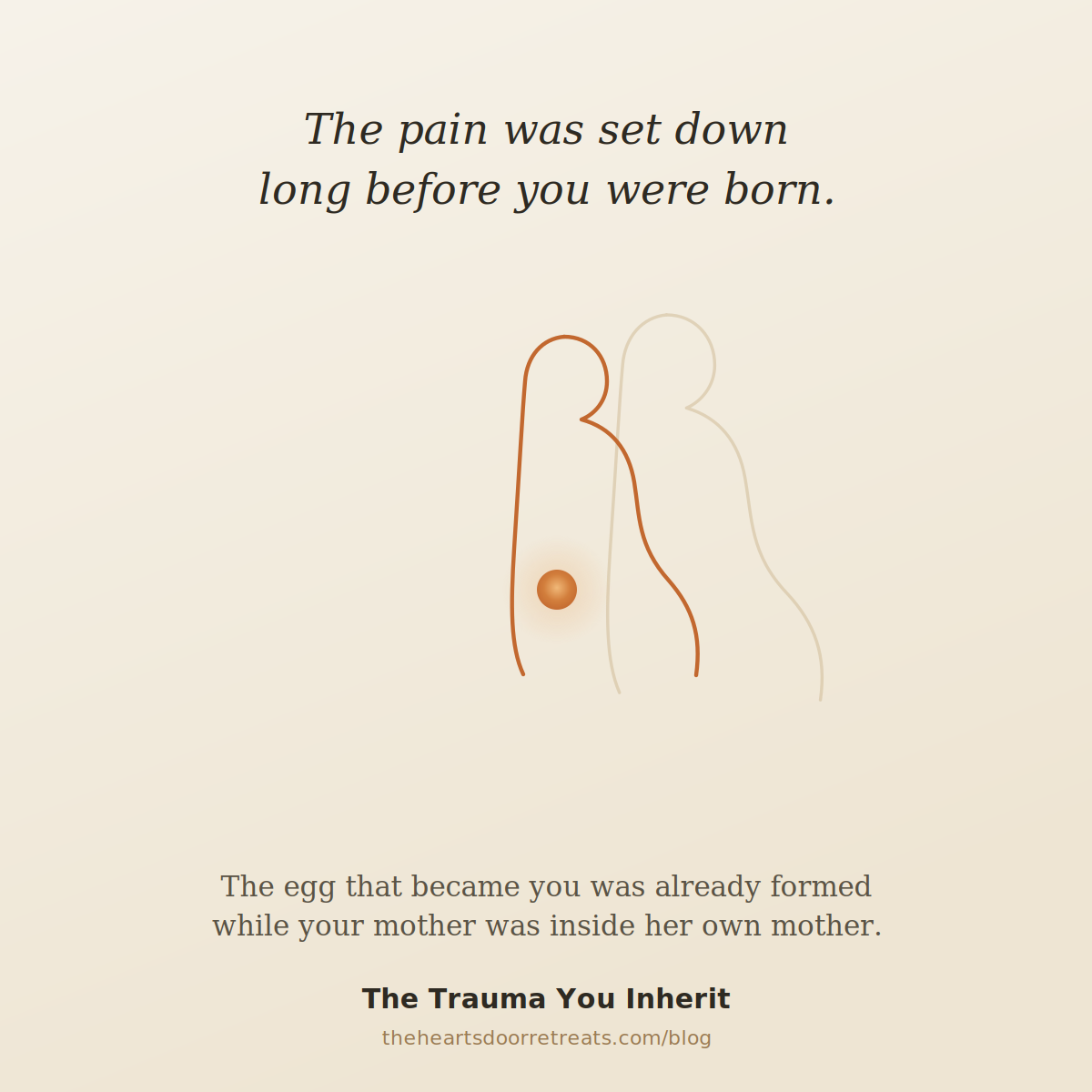
The Trauma You Inherit
Intergenerational Trauma and Psychedelics: The Pain Your Body Inherited
Some of what we carry was set down before we were born. In this post, researcher and facilitator Ioana Pop shares what surfaced in a San Pedro ceremony — a felt sense of inherited trauma along her maternal line — and holds it against the science of intergenerational transmission, from the Dutch Hunger Winter cohort to the body's way of keeping the score. An honest look at why a truffle ceremony can be where pain that was never only ours finally moves.
What Actually Happens in a Psychedelic Journey - Part 4: The Mystical Experience
What Actually Happens in a Psychedelic Journey: The Mystical Experience | The Heart's Door Retreats
The final part of our series on what happens in a psychedelic journey looks at the mystical experience: the sense of unity, boundlessness, and dissolved self that so many people describe. We explore why researchers now see this experience not as a side effect, but as one of the mechanisms through which psilocybin creates lasting change.

What Actually Happens in a Psychedelic Journey — Part 3: The Mind
What Actually Happens in a Psychedelic Journey — Part 3: The Mind | The Heart's Door Retreats
In the third part of this series, we explore the mental dimension of a psychedelic journey — what insight actually is, why the brain's default mode network is at the centre of it, and what three recent neuroimaging studies reveal about how psilocybin produces clarity at the neurological level. Includes a personal account of watching a long-held belief from the outside, and a clear-eyed account of what mental clarity in a journey can and cannot do.
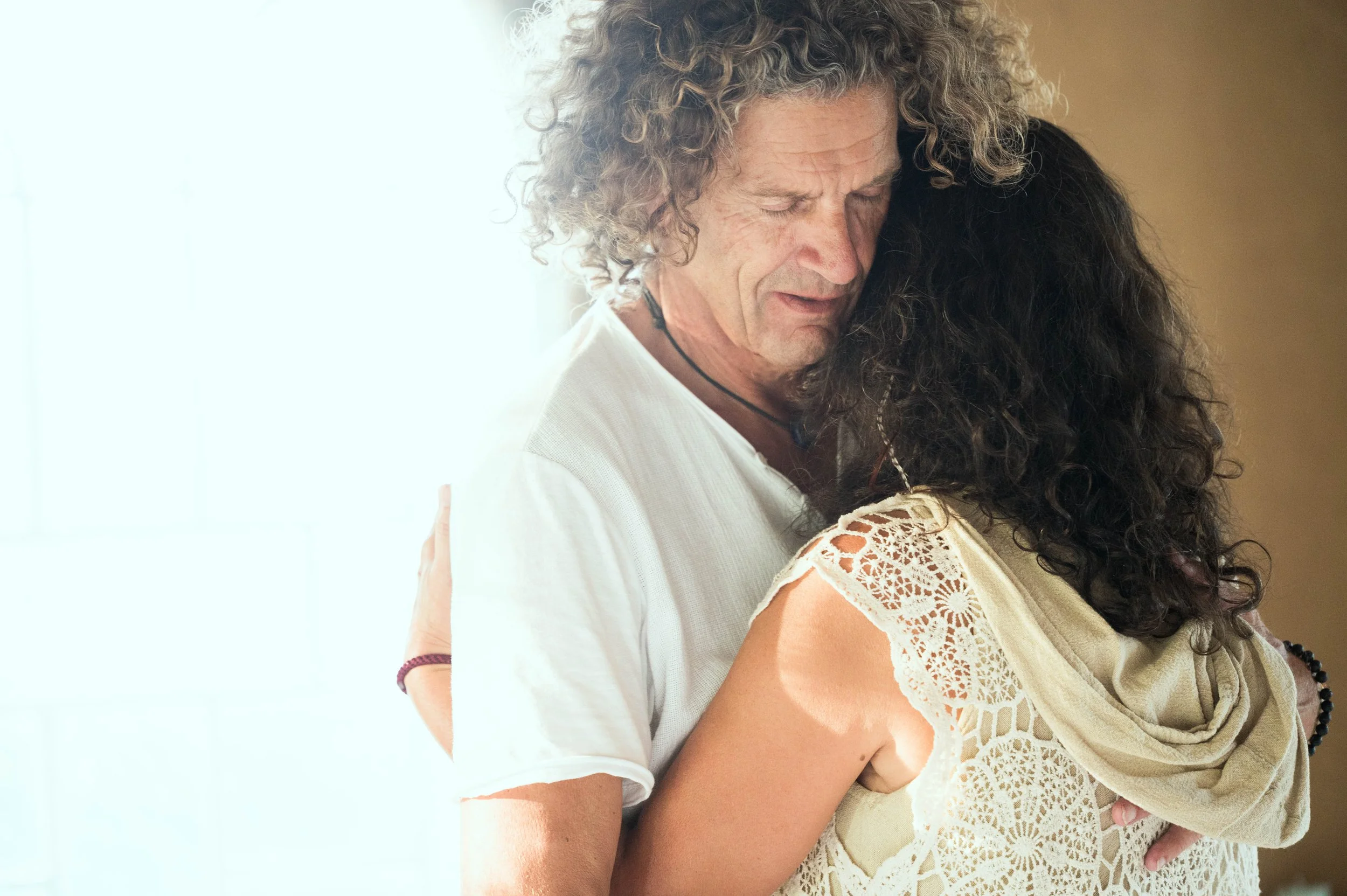
What Actually Happens in a Psychedelic Journey — Part 2: The Emotions
What Actually Happens in a Psychedelic Journey — Part 2: The Emotional Effects of Psilocybin
What emotions can a psilocybin experience bring up — and why does it reach feelings that ordinary life keeps out of reach? In Part 2 of this series, Ioana shares her own first ceremony alongside the neuroscience of emotional processing, critical period reopening, and why feeling lighter after a journey is not a mystery but a biology.

What Actually Happens in a Psychedelic Journey — Part 1: The Senses
What Actually Happens in a Psychedelic Journey — Part 1: The Senses
Most people curious about psychedelics want to know one thing before anything else: what will it actually be like? This post is the first in a four-part series answering that question honestly, from the inside. It covers the sensory effects of psilocybin — visual phenomena, body sensations, sound sensitivity, nausea — explains the neuroscience behind why they happen, and makes the case that the intensity of the sensory experience is not a side effect to be managed but the foundation of the work itself.
The Dose Is Not the Most Important Decision You Make Before a Psilocybin Ceremony
The Dose Is Not the Most Important Decision You Make Before a Psilocybin Ceremony
A personal and facilitation-grounded post on why preparation matters more than dosage in a psilocybin ceremony. Ioana shares two of her own ceremonies — one where exhaustion meant 15 grams was exactly right, another where she needed a supplement to be able to face a childhood wound. The post connects these experiences to the clinical research on mystical experience and therapeutic dosing, then moves into the preparation philosophy at Hearts Door Retreats: how the days before a ceremony are designed to move the nervous system from chronic activation toward rest, building safety and trust so the medicine has less resistance to work against.
How Much Psilocybin Is the Right Dose? Why the Answer Depends on More Than Grams
How Much Psilocybin Is the Right Dose? Why the Answer Depends on More Than Grams
A research-grounded explainer on psilocybin dosage that goes beyond gram ranges. The post covers the main dose categories used in clinical research and retreat practice, what the Johns Hopkins studies found about mystical experience as a predictor of lasting change, why individual variability means the same dose lands differently in different people, how dosage decisions are made in a guided ceremony, and why the container — set, setting, and integration support — is as pharmacologically relevant as the dose itself.

What to Do With the Open Window After a Psychedelic Journey
One researcher's experiment with PSYCH-K® — and what the neuroscience of psilocybin suggests about why it worked
This post follows directly from the Tuesday integration post. It opens with a personal story: a difficult post-ceremony period in which an old pattern — fear-driven exhaustion and brain fog linked to burnout — escalated into a ten-day cycle of coffee, disrupted sleep, and more fog. A chance meeting with PSYCH-K® trainer Evelien Janson leads to a session that shifts the underlying belief driving the pattern. The post then connects this experience to the neuroscience of the post-ceremony window — psilocybin-induced neuroplasticity — and introduces a hypothesis: that body-based approaches working directly on subconscious belief structures (PSYCH-K®, EMDR, somatic therapy, parts work) may be particularly effective during this window precisely because the brain is temporarily more malleable.
Why Your Psychedelic Ceremony Didn't Change Your Life — And What Actually Does
Why Your Psychedelic Ceremony Didn't Change Your Life — And What Actually Does
This post explores why psilocybin and truffle ceremonies often don't translate into lasting behavioral change — and what the research says actually makes them work. It introduces the concept of the integration gap, presents clinical data on success rates when integration is properly supported (Ross/NYU, Agin-Liebes long-term follow-up), explains why talk therapy alone is insufficient, maps the four dimensions of integration (somatic, spiritual, relational, existential) based on Bathje et al. 2022, and closes with Griffiths 2018 on meditation and spiritual practice as predictors of durable change.
Why Burned-Out Professionals Are Turning to Psychedelics
When the System Needs More Than Rest — Psilocybin, Breathwork, and Burnout Recovery
Burnout doesn't resolve with rest alone because it has reorganised the body's regulatory systems — the autonomic nervous system, the stress response, the brain's capacity for resilience and meaning. This post explores what the research now shows about three approaches that work at the level where burnout actually lives: psilocybin (drawing on two recent randomised controlled trials in clinical populations), slow breathwork and vagal regulation, and body-oriented awareness practice. Part two of two.

Burnout Is Not a Willpower Problem. It's a Biology Problem
What burnout actually does to the body — and why high-performing professionals are the last to see it coming
Burnout is not a mindset problem. It is a physiological state with measurable changes in the autonomic nervous system, the stress hormone system, and the brain's ability to generate meaning. This post traces the stages of burnout — from drive to collapse — explains the biology in plain language, describes the comorbidities that cluster around it, and makes the case that what recovery requires is not insight alone, but recalibration at the level of the body. Part one of two.

Why Psychedelics Reach What Antidepressants Miss
Why Psychedelics Reach What Antidepressants Miss
The brain in depression is not simply sad. It is structurally stuck — caught in self-reinforcing loops that conventional treatment can dampen but rarely dissolves. In this post, behavioral scientist and psychedelic facilitator Ioana goes into the neuroscience: what psychedelics actually do to large-scale brain organisation, why that is fundamentally different from how antidepressants work, and what it means in practice for people who haven't been helped by anything else. Part two of two.

We Are in the Middle of a Depression Epidemic
We Are in the Middle of a Depression Epidemic. And Our Main Tool Is Not Enough
Depression affects hundreds of millions of people worldwide — but the full scale of the epidemic includes a much larger, quieter group who live with significant symptoms without ever receiving a diagnosis. In this post, behavioral scientist and psychedelic facilitator Ioana explores the limits of current antidepressant treatment, the growing evidence for psychedelics as a genuinely different approach, and why the mechanism matters as much as the outcome. Part one of two.
Psychedelics Don't Just Change Your Mind. They Change Your Body-Baseline
Psychedelics Don't Just Change Your Mind. They Change Your Body-Baseline.
Autism, ADHD, and PTSD look different on the surface — but at the biological level they share a striking pattern: a chronically activated nervous system, a less flexible stress response, and a disrupted relationship with the body's own signals. That last part has a name: interoception — the body's capacity to sense and read its own internal state. When this capacity becomes imbalanced, as research now shows it does in both neurodivergence and trauma, the consequences reach into emotional regulation, anxiety, and the ability to feel safe from the inside.
This post explores the neuroscience behind that shared pattern, why psychedelics and breathwork address autonomic dysregulation at the physiological level in ways that talk therapy alone cannot reach, and why building interoceptive awareness — the ability to notice body sensations without immediately reacting to them — is not just a wellness practice but the foundation of deep ceremonial work.
My Nervous System Is Not Broken. It's Just Running at Full Resolution
My Nervous System Is Not Broken. It's Just Running at Full Resolution
What does it actually feel like to live in a neurodivergent nervous system — and what is happening biologically when sensory overwhelm, hypervigilance, and chronic anxiety become the baseline? This post explores the neuroscience behind neurodivergent autonomic dysregulation: why autistic and ADHD nervous systems run with the sympathetic gas pedal higher at rest, why the parasympathetic brake is less able to engage flexibly, and why this produces not just sensory sensitivity but a body that struggles to fully rest. Drawing on clinical research and lived experience, it makes the case for why healing has to happen at the body level — and why breathwork, body-oriented practices, and psychedelics are not wellness trends but tools that act directly on the autonomic nervous system, offering what the research is beginning to call a biological reset.
Microdosing psychedelics is not a supplement. It's a practice.
Microdosing psychedelics is not a supplement. It's a practice.
There is a version of microdosing psychedelics that looks like this: you take a small dose, go about your day, and feel subtly better. Like a vitamin. Like background support. Something that works on you while you're not paying attention. This version is appealing. It's also probably not how it works.
The research — including a study I conducted myself — points toward a different picture. One where the word that keeps appearing, across neuroscience and sociology, is not relief but alignment.

You left the ceremony knowing exactly what needed to change. So why is it so hard?
You left the ceremony knowing exactly what needed to change. So why is it so hard?
Most people who go through a psilocybin ceremony come out with real clarity — about what matters, what needs to change, what they've been avoiding. And then life resumes, and the old patterns are waiting. This post looks at why insight alone rarely produces lasting change, and what three converging lines of research suggest about microdosing as a structured integration practice: a 2021 neuroplasticity study showing how psilocybin opens a window of brain malleability, a Copenhagen rat study pointing to how repeated low doses strengthen the circuit between intention and automatic behavior, and the largest human survey on microdosing to date — which found that the mental health benefits of microdosing hold independently of prior ceremony experience. Not a shortcut. A support for the brain's capacity to do the work.

What happens when you give rats a microdose of psilocybin?
What happens when you give rats a microdose of psilocybin?
The answer helps explain what 4000 microdosing humans have been reporting for years. We look at two studies — the largest survey on microdosing to date, and a rat study that goes looking for the biology behind the reports — and what they together suggest about psilocybin, mental health, and the brain circuit where your intentions fight your habits.

Music is the journey
Music is the journey
Why is a psychedelic journey called a journey? Because it is one. A journey through emotions. Through memories. Through the body. And in that journey, music plays a central role.

Why do people say "It felt like 3 years of therapy in one day!"
Why a Truffle Ceremony Can Feel Like Years of Therapy — The Research Behind It
People often say a truffle ceremony felt like years of therapy in one day. New research looks at how psychedelic experiences change dysfunctional attitudes — those rigid inner beliefs that quietly shape our wellbeing. Here is what they found.
Curious if this path is right for you?