The Dose Is Not the Most Important Decision You Make Before a Psilocybin Ceremony
What years of working with psychedelics — as a researcher, a participant, and a facilitator — taught me about what actually determines how deep you go
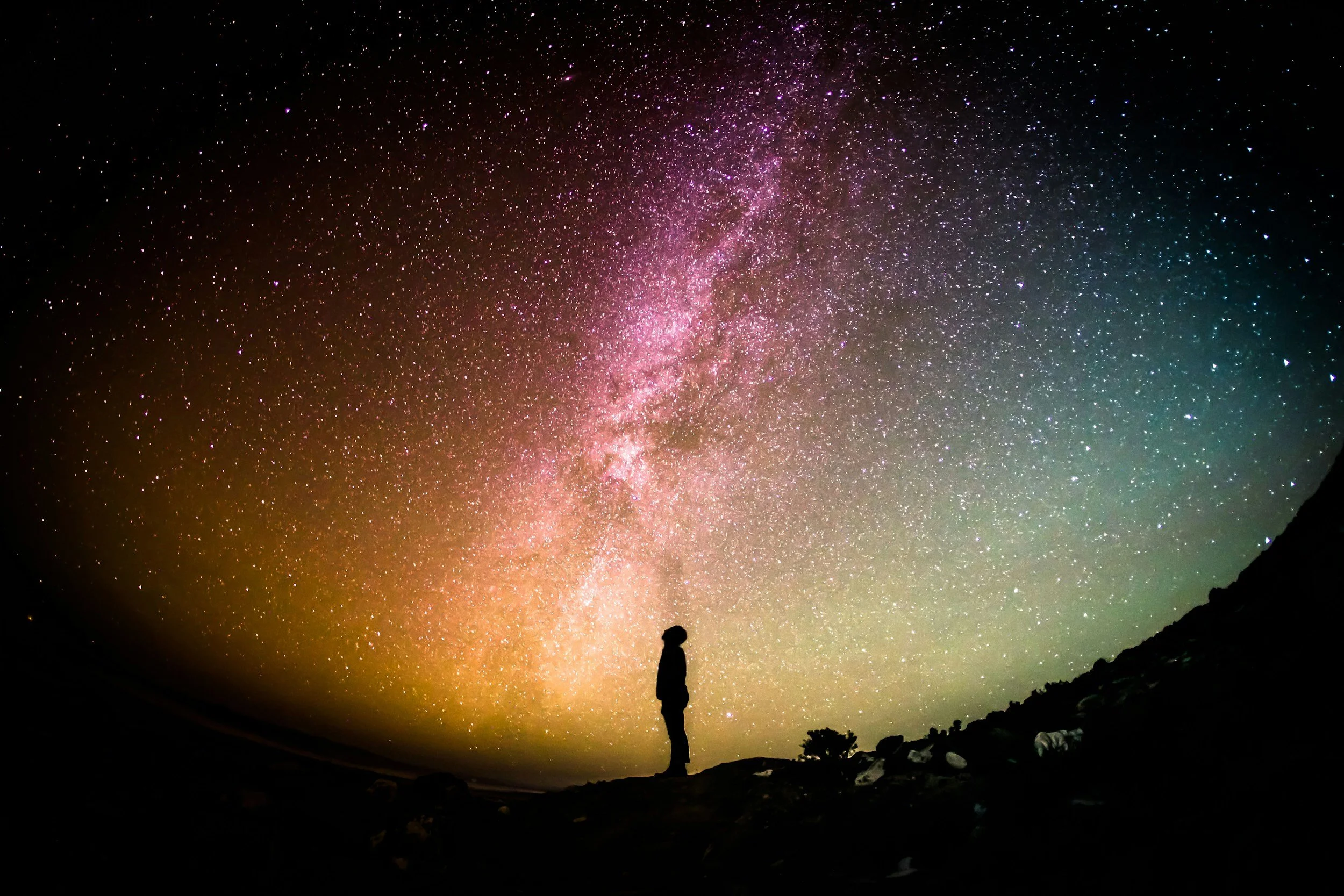
Two ceremonies. Same facilitator. Completely different journeys
The first time, I arrived exhausted.
Not tired in the way that a good night's sleep fixes. The kind of exhausted that has been accumulating for months — a demanding job, the constant mental load of being "on", the particular depletion that high-functioning people carry so well that they stop noticing it.
I had good intentions about preparation. Journaling. Time in nature. Slowing down in the days before. Life had other plans.
I sat down for the ceremony with 15 grams of psilocybin truffles — a moderate therapeutic dose, the starting point we use at Hearts Door Retreats. And fairly quickly, I fell asleep.
Which turned out to be exactly what needed to happen.
Not because sleep was the healing. But because my system was showing me something I had been refusing to see: that I was running so close to empty that my body's first response to finally being safe was to stop. The ceremony found its own depth — not the depth I had planned for, but the one I actually needed. Soft. Restorative. A quiet reckoning with how I had been living.
The second time, I arrived with something specific to face.
A childhood wound. One I had circled for years — understood intellectually, touched in therapy, but never fully visited. I knew it was there. I also knew, going in, that it was going to hurt.
I started with 15 grams again. An hour in, I could feel the medicine working — but I could also feel my system holding at the surface. The pain of that wound was present, but my body was bracing. The release wasn't coming. Even with bodywork and support from the facilitators, I was struggling.
So I asked for more.
Not because I wanted a stronger experience. Because I recognised that I needed help to let go — to stop protecting myself from something I had decided, in that room, that I was ready to face.
With the supplement, something shifted. I went there.
What that means is hard to describe precisely, but I'll try. I could feel the full intensity of that childhood pain — not dulled, not softened, not managed from a distance.
And at the same time, the medicine gave me something I hadn't expected: a kind of separation. I could feel everything without becoming it. I was the one feeling — not the feeling itself. The wound was real and present and I was with it completely, without resistance. Without running.
It is very close to what meditation teachers describe as equanimity — the capacity to feel everything, fully, without aversion or attachment. Without identifying with what arises.
Both journeys brought healing. I don't think one was better than the other. They worked differently, and they were aligned with where I was and what I needed.
What this tells us about dosage
The research on psilocybin and mystical experience is consistent on one point: dose matters.
Higher doses increase the probability of what researchers call a complete mystical experience — the dissolution of the ordinary sense of self, the dropping away of the mental constructs that define identity. Statements like I am the kind of person who... simply stop feeling true for a while.
And a study by Griffiths and colleagues found that the depth of that mystical experience was the strongest single predictor of lasting positive change — including remission of depression.
This is why, in guided settings, facilitators typically aim for what the research calls a therapeutic dose.
At Hearts Door Retreats, we start with 15 grams of fresh truffles and assess after an hour — then, in conversation with each participant, consider a supplement to reach approximately 25 grams total. This range maps onto the doses used in the major clinical trials, adjusted for the variability inherent in natural truffles.
But here is what the dosage research alone cannot capture.
Intention shapes the journey as much as grams do.
Sensitivity varies — between people and within the same person across time. Someone arriving depleted will have a different relationship to 15 grams than someone arriving rested and open. Someone carrying a specific wound may need the medicine's support to visit it. Someone who needs rest may find that rest is exactly what the ceremony offers — and that this is not a failure of the dose.
This is why the dosage decision is never made alone. We discuss it individually with every participant — their intention, their state that day, their history, what they are carrying. And we revisit it during the ceremony itself. It is a conversation, not a prescription.
At Hearts Door Retreats, we start with 15 grams of fresh truffles and assess after an hour — then, in conversation with each participant, consider a supplement to reach approximately 25 grams total. This range maps onto the doses used in the major clinical trials, adjusted for the variability inherent in natural truffles.
The variable that changes everything
There is something that makes the dose far less relevant than people expect.
Preparation.
Not the kind that people plan and then don't do — journal every day, walk in nature, meditate, eat well — with all good intentions, and then life comes in the way. Work. Children. The endless demands of a life that doesn't slow down just because a ceremony is approaching.
I know this pattern well. I arrived at more than one ceremony having done almost none of the preparation I intended. And I have seen it in the people I work with.
This is why, in our retreats, preparation is not homework. It is built into the days before the ceremony.
Each morning begins with breathwork — not as a relaxation technique, but as a way of waking up the body differently. Without the usual stimulants. Without the usual activation.
The body-oriented practices that follow are designed to move the nervous system gradually — from the chronic alertness that many of our participants live in daily, toward something that physiologists would call rest and digest. Activation first, to meet the body where it is, and then a slow return to stillness.
What happens in that process is often unexpected. Tears on the second morning. An emotion that surfaces during movement that hasn't had space to exist in months. An insight that arrives not in the mind but in the chest, the belly, the throat.
This is not incidental. It is the point.
Because what creates resistance in a psilocybin ceremony — what keeps people at the surface, unable to go deeper — is rarely the dose. It is the body's learned habit of protection. The autonomic nervous system's default toward vigilance. The accumulated tension of not having had time, or space, or safety, to feel what is actually present.
When the body arrives at a ceremony already moving toward rest — already beginning to trust the environment and the people in it — the medicine has less work to do. The dose becomes less relevant because there is less resistance to work against.
And there is something else that happens in the days before a ceremony, when people are together. The group begins to feel safe. Not just intellectually — but physiologically. Safety is contagious in that way. When people witness each other's vulnerability without judgment, their own defenses begin to soften. By the time the ceremony begins, the container has already been built.
In that state, the truffles open something different than they would have otherwise. Not just an altered state. A space — for bliss, for deep insight, for releases that have been waiting for years. For mystical experience. For the particular quality of being fully present with oneself, without running.
The question behind the question
When people ask how much will I take, what they are often really asking is: will it be enough? Will it take me where I need to go? Will I be safe?
The dose is one part of that answer. The container is the rest.
A high dose in an unprepared body, in an unfamiliar setting, without trust in the people holding space — that is one experience. The same dose inside a retreat that has spent days building safety, rest, and embodied presence — that is something else entirely.
The number on the scale is not unimportant. But it is the last thing we decide. Everything that happens before it is what makes it meaningful.
Our Foundation Retreat — 23 to 26 July in the Netherlands — is built around exactly this: days of preparation that make the ceremony possible, and integration support that makes it last. Ten places. If you're curious whether this is the right moment for you, we'd love to talk.
Post by co-founder Ioana.
Ioana is a researcher, psychedelic facilitator, and coach whose work sits at the intersection of science, embodiment, and lived experience. She spent years inside academia studying psychedelics, health and wellbeing — and eventually decided the most useful thing she could do with that knowledge was bring it into the room with people, not just onto the page. These posts are her attempt to make psychedelic science accessible and honest — without flattening it into wellness copy or drowning it in jargon.
At Hearts Door Retreats, integration is built into every ceremony we offer. We provide an integration guide tailored to what arose in your experience — because the window the ceremony creates is real, and we want to help you use it well. Our next Foundation Retreat is 9–12 July in the Netherlands. If you're curious, we are glad to talk. Read about our work here
