We Are in the Middle of a Depression Epidemic
And Our Main Tool Is Not Enough
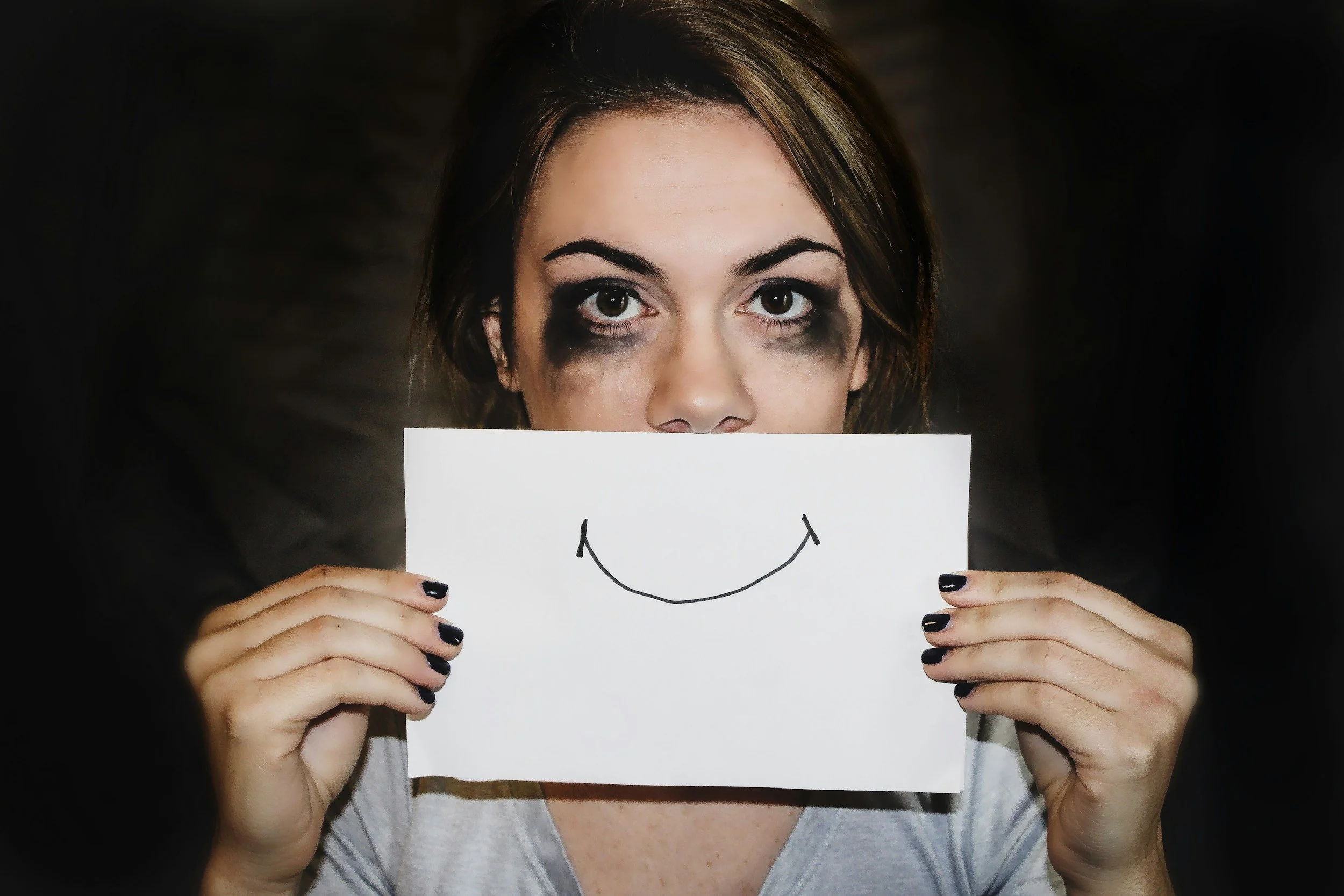
Part one of two. Part two goes into the neuroscience of why psychedelics work differently — and what that means for people who haven't been helped by anything else.
I want to start with a short list of questions. Read them slowly. Notice what you recognise — not over the course of your life, but in the last two weeks specifically.
Over the last two weeks, how often did you feel this way?
Did you feel depressed?
Did you feel that everything you did was an effort?
Was your sleep restless?
Did you feel lonely?
Did you feel sad?
Did you feel happy?(or, more honestly — did you not?)
Did you enjoy life?(same question)
Did you feel you couldn't get going?
These eight questions are the CES-D 8 — the Center for Epidemiologic Studies Depression Scale, short version. In my previous research work , this is the kind of tool we used to measure depressive symptoms in the general population. Not to diagnose but to understand how many people, at any given moment, are living with a significant weight.
The answer, consistently, is: a lot more than we think.
The epidemic no one is fully naming
Depression is now one of the leading causes of disability worldwide. But the clinical numbers — the people formally diagnosed — are only part of the picture. There is a much larger group of people who never reach the threshold of a clinical diagnosis and yet are living with most of these symptoms, most of the time. Persistent low mood. Exhaustion that sleep doesn't fix. A quiet inability to enjoy what used to give pleasure. The sense that something is off, without being able to name it.
Depression rarely arrives alone. It travels with anxiety — the two are so frequently comorbid that many researchers argue they reflect the same underlying dysregulation expressed in different directions.
One turns inward and slows you down. The other turns outward and keeps you braced.
And increasingly, both travel with burnout — a state that is not simply tiredness but a nervous system that has been pushed past its limits and has lost its way back to baseline.
We are, in short, living through something that the scholarly literature is beginning to call an epidemic. And our primary response to it, for the last thirty years, has been antidepressants.
You cannot selectively numb the difficult emotions and leave the good ones intact. The same dampening that reduces the weight of persistent sadness also flattens joy, reduces emotional range, and in many people creates a kind of affective blunting — a feeling of being present but not fully there.
What antidepressants do — and what they don't
I want to be careful here, because this is not a straightforward story and I don't want to tell it simply. Antidepressants help some people. For some people they are lifesaving. That is true and it matters.
But it is also true that a significant portion of their measured effect in clinical trials is attributable to placebo response. The neurobiological story — that depression is caused by low serotonin, and SSRIs fix it by raising serotonin — has been substantially revised. The picture is more complicated, and the honest position is that we do not fully understand the mechanism.
What we do know is that SSRIs affect the emotional system broadly. You cannot selectively numb the difficult emotions and leave the good ones intact. The same dampening that reduces the weight of persistent sadness also flattens joy, reduces emotional range, and in many people creates a kind of affective blunting — a feeling of being present but not fully there.
Recent research has confirmed this directly: escitalopram, a commonly prescribed SSRI, significantly reduced the brain's responsiveness to emotional stimuli across the board. Not just the painful ones.
And then there are the people for whom antidepressants simply do not work. Treatment-resistant depression — defined as failing to respond to at least two adequate courses of antidepressant treatment — affects a substantial minority of people with depression. For these people, the existing toolkit offers very little.
Enter psychedelics — and the question of why now
The modern clinical research into psychedelics for depression began in earnest around 2000, picking up pace through the 2010s after decades of near-complete prohibition following the political crackdown of the 1970s. The earlier research — done in the 1950s and 60s, before the ban — had shown genuine promise. What the modern wave has done is bring rigorous methodology to that early promise.
In one head-to-head trial, the researchers compared psilocybin directly against escitalopram - the antidepressant dicussed above, in patients with moderate-to-severe depression. Psilocybin was at least as effective as escitalopram on the primary depression outcome measure at six weeks, with a 70% response rate and 57% remission rate.
This from one or two sessions, with effects sustained at follow-up for six to twelve months.
Across four phase 2 double-blind trials summarised in a 2025 commentary, response rates for psilocybin — defined as a 50% or greater reduction in depressive symptoms — ranged from 37% to 70%. Remission rates from 29% to 57%.
These are not small effects. And critically — as I will explain in part two — they appear to work through a fundamentally different mechanism than antidepressants. Not by blunting the emotional system. By changing how the brain organises itself.
Who this is actually for
The clinical trials focus on diagnosed depression, particularly treatment-resistant cases. But I think the most important population is larger and quieter than that.
It is the people who would recognise themselves in those eight questions at the top of this post, but who have never received a diagnosis. Who are functioning — going to work, maintaining relationships, keeping things together — and yet are living with a persistent weight that they have learned to call normal. Who have tried therapy, tried changing their lifestyle, tried medication, and found partial relief at best.
And it is people for whom the existing treatment model — talk to a doctor, take a pill, manage symptoms — has never quite addressed the question underneath the question. Not just what is wrong, but why the system keeps returning to this state. And whether there is a way to actually change it.
That is what part two is about.
In Thursday's post, I go into the neuroscience: what psychedelics actually do to the brain, why that matters specifically for depression, and why the mechanism is so different from anything we have had before. I'll draw on three recent research papers — including a mega-analysis published in Nature Medicine in April 2026 — to explain it as clearly as I can.
Ioana is a social scientist, psychedelic facilitator, and co-founder of Hearts Door Retreats. She has published research on microdosing and wellbeing at Tilburg University, The Netherlands.
At The Heart's Door, we work with psilocybin in ceremonial contexts and support structured integration practices. Curious about our retreats combining psilocybin, breathwork and body-oriented practices? Read about our work here
